Lines on a Plan, Not Posts in the Ground: A Practical Guide to Neighbour Disagreements
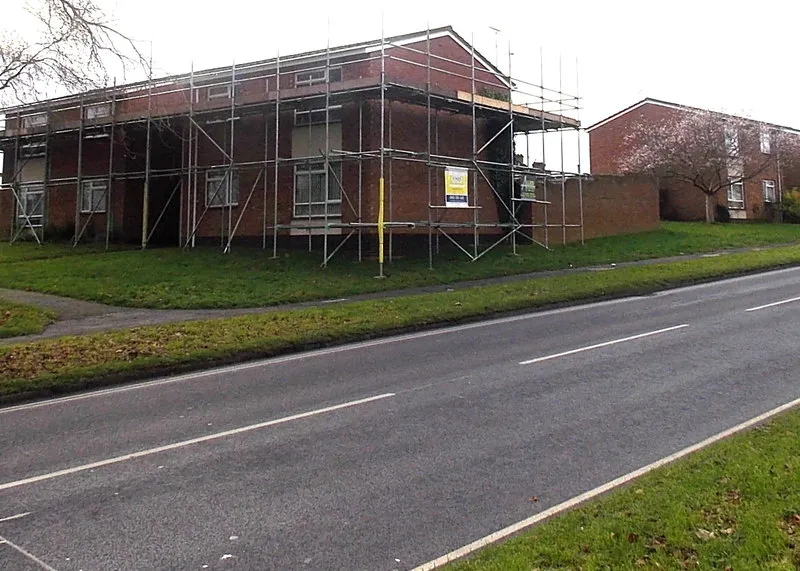
Photo: Jaggery , CC BY-SA 2.0, via Wikimedia Commons
Neighbour disputes have a way of becoming larger than the thing that started them. A fence panel is replaced, a hedge is cut back, a gate is used more often than before. The legal question is rarely answered by pointing at the feature in the garden. It is answered by the paperwork, the history and, sometimes, by a court's assessment of what is fair and proportionate.
The phrase worth remembering is simple: the boundary is not the fence. A fence is a physical object. A boundary is a legal line, or in many cases a general boundary shown on a plan. The two often coincide, but they are not the same thing.
What the paperwork actually proves
For registered land in England and Wales, the title plan usually shows general boundaries. It is indicative rather than a precise survey. The plan may show a boundary running along a feature, but it will not normally tell you which side of the feature owns the land or the fence.
Older conveyances and transfer plans can be more detailed, but they still require interpretation. Measurements may be approximate. A plan may show a line that no longer matches the physical layout. The title register may contain covenants, easements or rights of way that matter more than the position of a fence post.
If the ownership of a boundary feature is disputed, start with the title documents for both properties. HM Land Registry records are available for a modest fee. If the deeds are old or inconsistent, a solicitor can advise on what they mean. In rare cases, a chartered land surveyor may be needed to prepare a plan, but a survey cannot by itself resolve a legal dispute.
The fence, the hedge and the wall
People often assume that the fence on the left, or the hedge at the bottom, belongs to one property or the other. There is no universal rule. Ownership depends on the title documents, the history of maintenance and any agreement between previous owners.
Even if a fence belongs to your neighbour, you may have obligations or rights in relation to it. Covenants can require maintenance. Rights of way can limit what can be built. A wall may be a party wall, or it may be entirely on one side. The label matters less than the legal effect.
Build a useful evidence trail
A dispute is easier to resolve when the facts are clear. Keep a dated file. Photograph the feature from both sides, including close-ups and wider context. Note when changes were made and who made them. Keep letters, emails and records of conversations. If a neighbour admits that a fence is yours, or that a right of way exists, record that admission.
Do not rely on a single photograph taken after the event. A sequence of images over time is more useful. Keep receipts for repairs and maintenance. If you have paid for a survey or obtained advice, retain it. A clear chronology can reduce the temperature and help a mediator or adviser see the issues quickly.
Talk first, then mediate
A direct conversation is often the cheapest and fastest route. It is also the easiest to get wrong. Write down the points you want to make, stick to the facts and avoid attributing motives. If the conversation becomes hostile, end it politely and put your concerns in a letter.
Mediation is often sensible before formal action. A local mediation service or a solicitor-led process can help both sides identify what they actually need. Mediation is not a sign of weakness. It is a way of testing whether the dispute can be resolved without disproportionate cost.
Trees, hedges and access
Trees and hedges raise their own legal issues. You may be able to cut back branches that overhang your property, but you should not create a nuisance or damage the tree. Check whether a Tree Preservation Order or conservation area designation applies before doing significant work. For high hedges, Part 8 of the Anti-social Behaviour, Crime and Policing Act 2014 allows local authorities to consider complaints in certain circumstances, but the process has thresholds and is not a general remedy for every disagreement.
Access disputes often involve rights of way or easements. Check the title register and any historic documents. A right of way may be express, implied or prescriptive, but prescriptive easements are not automatic and can be difficult to prove. Do not block a route that others may be entitled to use without taking advice.
Extensions and party wall issues
If a neighbour is building an extension, planning permission and building regulations may be relevant. The Party Wall etc. Act 1996 can require notices and a party wall award where works affect a shared wall or excavation near a boundary. A planning dispute is usually a matter for the local authority, not a private boundary claim. Keep the two issues separate.
When to take it further
Formal action may be appropriate where there is a clear legal right, a continuing trespass or a nuisance that cannot be resolved otherwise. A solicitor's letter can clarify the position. Court proceedings are possible, but the costs and risks are real. Boundary claims can be fact-heavy and expensive, and the court will expect the parties to have considered alternative dispute resolution.
Before issuing a claim, ask whether the outcome justifies the cost. A boundary agreement, a licence or a practical compromise may be better than a judgment that leaves the relationship in ruins. If the dispute concerns title, a boundary agreement can sometimes be recorded with HM Land Registry, but legal advice is essential.
The guiding principle is proportionality. A neighbour dispute is rarely just about a fence. It is about certainty, privacy, access and the quiet enjoyment of a home. The law can provide answers, but it is often slower and more expensive than a sensible conversation. Start with the paperwork, build the evidence, try mediation, and keep formal action for the cases that truly need it.