The Last Mile of Termination: Why Delivery, Not Decision, Decides Contractual Endings
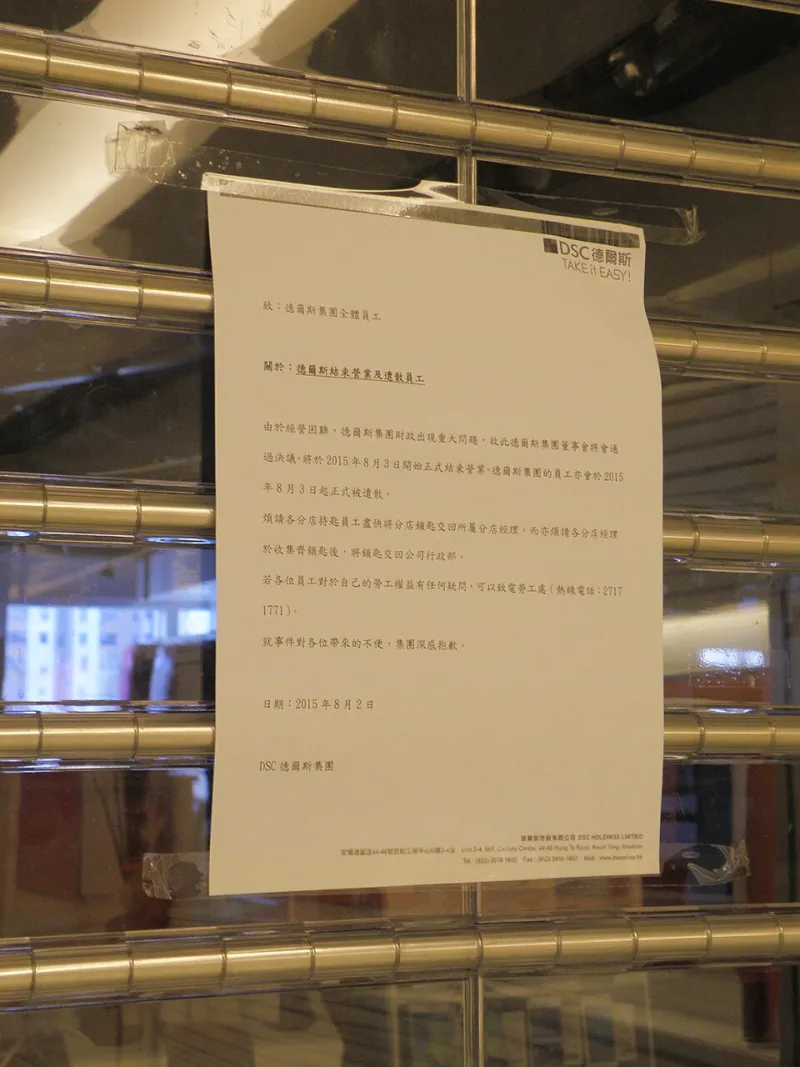
Photo: Exploringlife, CC BY-SA 4.0, via Wikimedia Commons
A termination decision is usually taken indoors: a board resolves, a director signs, and a letter is prepared. The legal ending of the contract, however, happens somewhere else. It happens at the point of service. If the notice does not reach the right recipient, by the right method, at the right time, the contract may continue in force despite the clearest possible internal decision to end it. For SMEs and individuals, this is the last mile of termination, and it is where otherwise sound positions quietly fail.
The decision is not the ending
A contractual right to terminate is a power conferred by the agreement. It must be exercised in the manner the agreement prescribes. Where a clause requires notice in writing to a named address, a telephone call or an email to a different department may not do. Where the clause specifies a method, such as hand delivery or recorded post, a casual message may be treated as ineffective even if the other side actually reads it. The question is not whether the counterparty understood the business intention. The question is whether the contract's machinery was operated correctly.
The practical consequence is significant. A supplier that believes it has terminated a distribution agreement may continue to be bound by exclusivity, minimum purchase obligations or indemnities. A customer that believes it has ended a service contract may find itself liable for further fees. A notice that is invalid can also amount to a repudiatory breach if it wrongly asserts an entitlement to terminate. The dispute then shifts from whether termination was justified to whether the notice itself was effective.
Service clauses are directions, not suggestions
Most commercial contracts contain a service provision. It is often buried near the boilerplate and read less closely than the payment terms. It may specify the permitted methods of notice, the addresses to which notice must be sent, the recipient's job title, and the time at which notice is treated as received. Each element matters. A clause that permits notice by hand or by recorded delivery does not ordinarily permit email. A clause that requires notice to the registered office does not ordinarily permit service on a branch or on a solicitor. A clause that names the company secretary does not ordinarily permit service on a sales director who happens to be known to the sender.
Strict compliance is the safer assumption. In Holwell Securities Ltd v Hughes [1974] 1 WLR 155, the Court of Appeal held that the postal rule did not apply where an option was to be exercised by notice in writing to the grantor. The notice had to be communicated. The case is old, but its lesson remains practical: where a contract prescribes a mechanism, courts are reluctant to substitute a looser one because it would be commercially convenient.
Deemed receipt and the rebuttable assumption
Deemed service provisions are designed to remove uncertainty. They commonly state that a notice sent by first-class post is deemed received two business days after posting, or that an email is deemed received at 9am on the next business day if sent outside office hours. These provisions can be valuable. They allow a party to calculate deadlines and to act on the assumption that notice has arrived.
They are not, however, a guarantee that the notice was in fact received. A deemed receipt clause creates a contractual assumption, not an immutable fact. If a letter is returned undelivered, or an email bounces, the sender may be unable to rely on the deeming provision. The position is fact-sensitive. A party that knows, or ought to know, that service has failed should not proceed as though it has succeeded. In practice, a returned envelope or an automated failure message is a warning that the last mile has not been completed.
The timing rules also deserve attention. Many clauses treat notices sent after a specified hour, or on a non-business day, as received on the next business day. A termination that is intended to take effect immediately may therefore take effect later than the sender expects. If the contract requires a minimum period of notice, that period must be calculated from the deemed receipt date, not from the date on the letter.
Email, portals and authorised recipients
Email is now a common contractual channel, but it brings its own evidential risks. The clause may specify a particular address, such as [email protected] rather than an individual's inbox. It may require the notice to be attached as a PDF rather than pasted into the body. It may require a read receipt or a follow-up copy by post. Sending to the right company but the wrong mailbox can be as ineffective as sending to the wrong company.
Portal notices raise similar issues. A contract may require a notice to be uploaded to a procurement or contract-management platform. That method is effective only if the clause permits it and the upload is completed within the required period. Access problems, password failures and portal downtime should be documented. A screenshot showing a failed upload may later be valuable, but it is not a substitute for service by an alternative permitted method if one is available.
The recipient's authority is a further point. Notice to a junior employee who does not handle contractual matters may not count, even if that employee opens the email. Notice to a director or to the address specified in the clause is safer. Where the counterparty is a company, check its registered name and office. Where it has changed address, serve at the address required by the clause and consider whether the change has been validly notified under the contract.
The evidence that makes a notice stick
A termination notice should be sent with the same care as a claim form. Before dispatch, re-read the service clause and confirm the method, address, recipient and timing. After dispatch, retain proof. For postal notices, keep the certificate of posting, the tracking record and a copy of the envelope and letter. For hand delivery, arrange for a witness and, if possible, obtain a signed receipt. For email, keep the sent item, the delivery receipt and any bounce message. For portal uploads, preserve a screenshot and the platform's confirmation.
The evidential trail should be contemporaneous. A file note made on the day of service is more persuasive than a reconstruction prepared months later. It should record who sent the notice, when, by what method, to which address, and what confirmation was received. If the contract permits more than one method, using all permitted methods may be prudent, provided the notice is not thereby made ambiguous. Where a clause requires notice to be given in a particular sequence, that sequence should be followed.
A practical sequence for SMEs and individuals
First, identify the exact termination clause and any separate service clause. Second, confirm the counterparty's legal name and the contractual address. Third, check whether the clause requires a named recipient or office holder. Fourth, choose a permitted method and, if possible, a second permitted method. Fifth, calculate the deemed receipt date and ensure any minimum notice period is satisfied. Sixth, preserve proof of dispatch and delivery. Seventh, diarise the effective date and confirm internally that no further performance is required after it.
Where the other side later says that notice was never received, do not rely on assumption. Re-examine the clause and the evidence. It may be necessary to serve a further notice, expressly without prejudice to the argument that the earlier notice was effective. That step should be taken with advice, because a poorly worded repeat notice can create fresh ambiguity. The safer course is to make the first notice difficult to challenge.
Termination is not complete when the decision is minuted. It is complete when the contractual mechanism has been operated and proved. In a dispute, the last mile is often the only mile that matters.